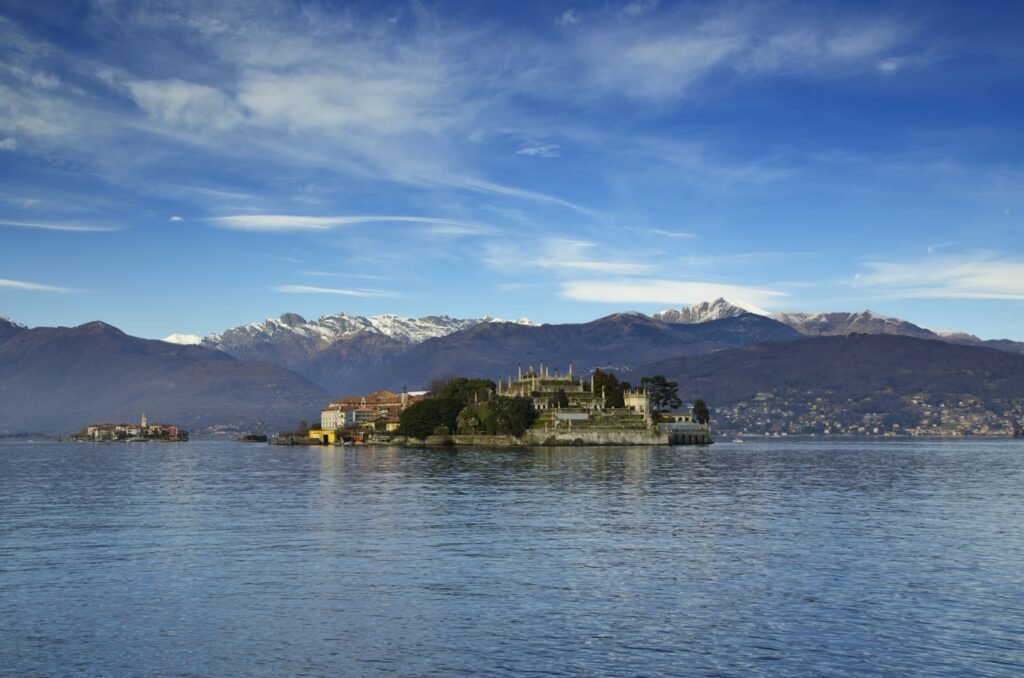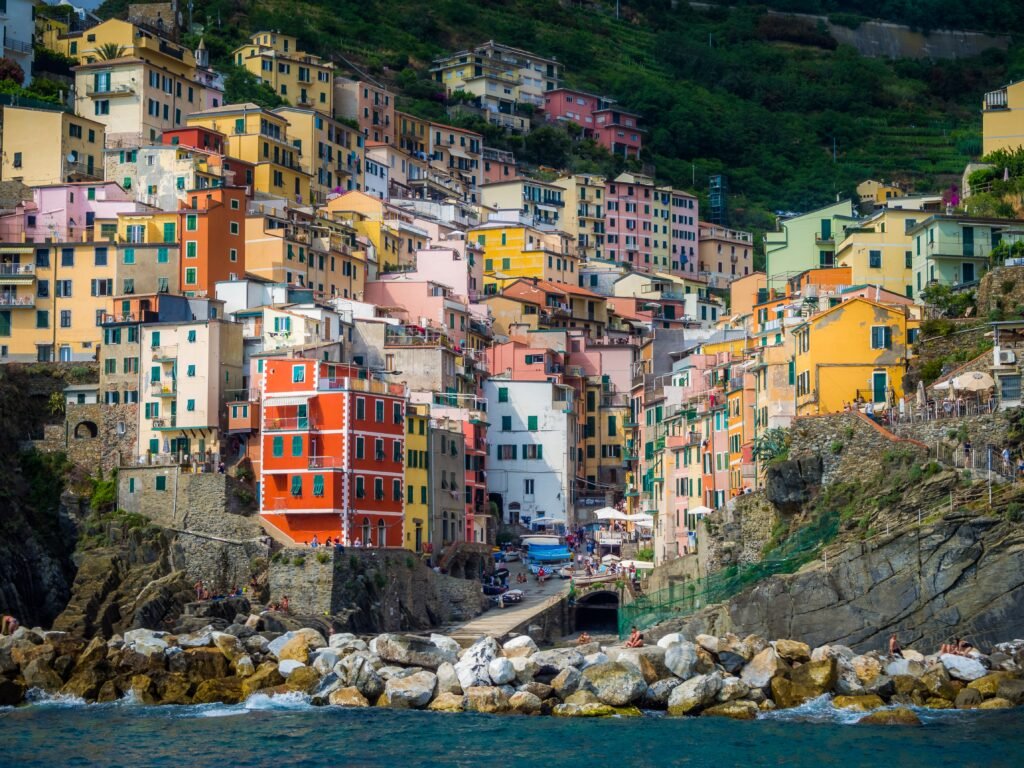
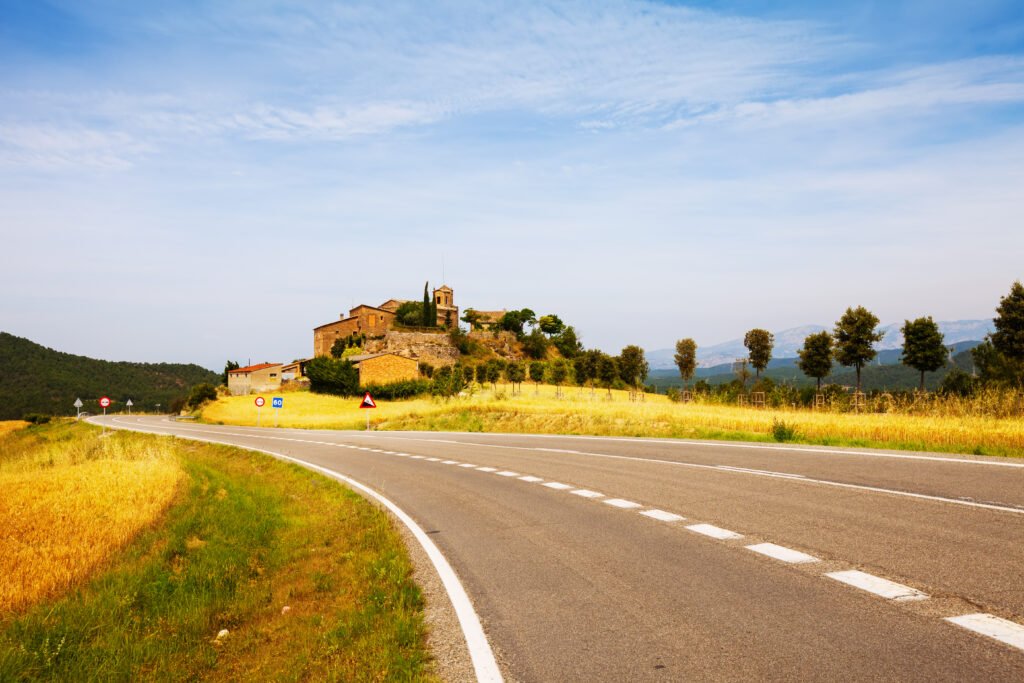
Italy doesn’t have one great road trip. It has about fifteen, and the difficulty is choosing which one to take when you only have a week and the rental car is already booked.
The country is built for driving in a way that feels almost deliberate. Autostrade get you between cities fast. Provincial roads get you somewhere worth remembering. The difference between the two isn’t just speed — it’s whether you arrive having seen the country or having flown through it at 130 kilometers per hour behind a truck.
These are the routes worth taking slowly.
The Amalfi Coast — SS163
There’s a reason every travel publication on earth has photographed this road. The SS163 runs along the cliff face above the Tyrrhenian Sea between Positano and Vietri sul Mare, with the kind of views that make passengers forget to be nervous about the width of the lanes.
And the lanes are narrow. The road was built for a different era’s vehicles and it hasn’t expanded to accommodate the present one. Buses and trucks negotiate corners with a confidence that either impresses or terrifies depending on your temperament. Drive it in the morning before the tour buses arrive, keep your windows down, and accept that the journey will take longer than the map suggests. That’s not a problem. That’s the point.
The villages along the route — Positano, Praiano, Furore, Atrani — each deserve at least an hour of wandering. Stop for coffee somewhere that doesn’t have an English menu. Order whatever the person next to you is having.
Tuscany’s Strada della Chiantigiana — SR222
The wine road between Florence and Siena runs through the heart of Chianti country and looks exactly like the Tuscany that exists in the collective imagination — cypress trees in rows, terracotta farmhouses on hillsides, vineyards running in every direction.
The SR222 is unhurried by design. Small towns appear without warning: Greve in Chianti with its triangular piazza, Panzano with its famous butcher who has been written about in every food publication worth reading, Castelnuovo Berardenga at the southern end where the road delivers you to Siena. None of them require more than a few hours and all of them reward stopping.
The best version of this drive happens in late September or October when the harvest is underway. Winery visits require no planning — most estates along the route accept visitors without appointments during harvest season, and the difference between tasting wine in a sterile room and tasting it surrounded by people actually making it is considerable.
The Dolomites — Grande Strada delle Dolomiti
The Grande Strada delle Dolomiti was constructed in the early twentieth century as a scenic route through the eastern Alps, and the engineers responsible for it understood that the mountain scenery should be visible rather than hidden by tunnels and cuttings. The road climbs through passes that sit above two thousand meters, with views across rock formations that look like something a film set designer would reject for being too dramatic.
The Passo Pordoi and Passo Gardena are the highest points and the most photographed. Pull over at both. Not for the photographs, though those will be good, but because the altitude gives the air a quality that’s genuinely different from anything at sea level and worth standing still in for a few minutes.
The Dolomites route is a summer and early autumn drive. The passes close in winter and even in late October the weather can turn within an hour. Check conditions before you start and don’t assume the forecast from the valley applies at altitude.
Via Aurelia — SS1
The oldest road on this list and possibly the oldest continuously used road in Europe. The Via Aurelia was built by the Romans and runs along the Tyrrhenian coast from Rome to Genoa, covering territory the empire considered important enough to engineer properly two thousand years ago.
The modern SS1 follows the same route, which means driving it carries a specific historical weight that newer roads don’t have. Sections through Tuscany and Liguria run right along the coastline, passing through fishing towns that tourists miss because they’re between the more famous destinations on either side. Castiglioncello, Populonia, Talamone — these places appear on the road before they appear on itineraries, which is exactly the right order.
The Sicilian Interior — SS121
Sicily gets visited for its coasts. Its interior is almost entirely overlooked, which means the SS121 running west from Catania toward Palermo through the center of the island passes through towns that haven’t adjusted their relationship with tourism because tourism hasn’t arrived yet.
The landscape shifts from citrus groves near the coast to grain fields and sulfur country further west, passing through Enna — the highest provincial capital in Italy, sitting on a ridge with views across the entire island — and Caltanissetta before descending toward the coast. The road is slower than the autostrada by a significant margin. The trade-off is a Sicily that most visitors never see.
Val d’Orcia — SP2 and Provincial Roads
The Val d’Orcia is a UNESCO World Heritage Site and the landscape has been protected precisely because it represents Renaissance Italy’s ideal of a humanized natural environment — farms, roads, and hilltowns arranged across the land in a way that looks planned even when it wasn’t.
The SP2, the old Cassia road running south from Siena, passes through the valley before the route spreads across a network of provincial roads connecting Pienza, Montalcino, Bagno Vignoni, and Radicofani. None of these places are large. Pienza has a single main street. Montalcino is a hilltop town best known for Brunello wine and the views from its fortress. Bagno Vignoni is built around a thermal pool in the village square where Renaissance popes came to take the waters.
The provincial roads connecting them are unpaved in places and white with limestone dust. A standard rental car handles them without difficulty. The dust on the car when you return it is evidence of having been somewhere worth going.
The Apennines — SS12 Through Emilia-Romagna
The mountain road through the northern Apennines connecting Modena to Lucca via the Abetone pass is one of those drives that locals take for granted and visitors rarely discover. The SS12 climbs from the Po Valley floor through beech and chestnut forest, past spa towns that were fashionable in the nineteenth century and have since relaxed into something more authentic, and across a pass at 1,388 meters before descending into Tuscany.
The road is genuinely beautiful and genuinely empty compared to the routes further south. The towns along it — Pavullo nel Frignano, Pievepelago, Abetone itself — are Emilian in character rather than Tuscan, which means different food, different dialect, and a different relationship with the landscape. The tortellini in Modena at the end of the return journey justifies the entire detour.
How to Actually Drive in Italy
Italian roads have a reputation that’s partially deserved and mostly exaggerated by people who drove in July on the Amalfi Coast and generalized from the experience. The autostrada system is efficient and well-maintained. Secondary roads require attention to road width and local driving customs, particularly the understanding that Italian drivers treat lane markings as suggestions in mountain conditions.
A few things worth knowing before you start: ZTL zones — restricted traffic areas in historic city centers — are enforced by cameras and the fines arrive weeks later at the rental car company, who add their own administrative charge on top. Disable GPS routes that send you into them. Fuel prices vary significantly between autostrada service stations and ordinary petrol stations — the premium for motorway convenience is real. And parking in Italian cities follows a color-coded system where blue lines require payment, white lines are free, and yellow lines are reserved for residents. Understanding those three colors saves more time than any app.
The rest of it is just driving. The roads are there. The country they pass through rewards every kilometer of attention you give it.